Place · Spain
The history of Barcelona
Assembled from 3 dug tiles · 36 sourced records · 21081 BC–2025 · last reviewed 8 November 2026
This record gathers two corners of Barcelona's Eixample district: Carrer de Sardenya, beside Gaudí's workers' schoolhouse, and Carrer del Consell de Cent, home to the city's oldest surviving public library. Fire, war and rebuilding mark both streets across more than a century.
These are the individual spots Strata has dug in Barcelona — not a guide to the town, but a record of what happened on particular ground.
Digs in Barcelona
An Eixample street cornerYou're standing on a residential block in Barcelona's Eixample district, near the Episcopal Public Library. Edifici del Seminari Conciliar de Barcelona
21081 BC–2025 A long Eixample street
You're standing on Carrer del Consell de Cent, a major street that runs through Barcelona's Eixample district. Carrer del Consell de Cent
21081 BC–2024 Gaudí's workers' school, by the basilica
You're standing beside the Sagrada Família Schools, a small brick schoolhouse Antoni Gaudí built for the builders' children. Sagrada Família schools
1892–2002
Barcelona in layers
21081 BC to 20621 BC
Radiocarbon analysis of material from nearby excavations dates human activity in this area to between 21,081 and 20,621 BC, showing this ground was occupied in the depths of the Ice Age. Cross-referenced p3k14c
21081-20621 BC
A radiocarbon sample dated between 21081 BC and 20621 BC was recovered from excavation nearby, marking human presence in this region at the end of the last Ice Age. Open Context: Cross-referenced p3k14c
303
The early Christian saint Eulalia, venerated as the co-patroness of Barcelona, was martyred. She was later buried in the Cathedral of the Holy Cross and Saint Eulalia, becoming central to the city's religious identity. Eulalia of Barcelona
1017
The count who ruled Barcelona and consolidated its power in the early medieval period was buried in the Cathedral of the Holy Cross and Saint Eulalia. Ramon Borrell, Count of Barcelona
June 9-11, 1359
A naval engagement between the Castilian fleet of Peter I and the Aragonese fleet took place in coastal waters off Barcelona on June 9-11, 1359, during the War of the Two Peters. The Aragonese victory saw the first use of gunpowder in naval combat. The Dreta de l'Eixample neighborhood now occupies what was then the outer fringe of medieval Barcelona. Wikipedia
June 7-10, 1640
The Corpus de Sang, a violent riot, erupted in Barcelona on June 7-10, 1640, during Corpus Christi celebrations, initially in Sant Andreu de Palomar before spreading through the city during the early stages of the Reapers' War. Wikipedia
1705-1714
The city endured multiple sieges between 1705 and 1714 during the War of Spanish Succession. The longest siege lasted from September 1713 to October 1714, a 13-month battle pitting Archduke Charles of Austria against Franco-Spanish forces that ultimately ended with Barcelona's capitulation and the abolition of its medieval institutions. Wikipedia
1772
The Episcopal Public Library, one of the city's oldest and most important heritage libraries, was established within the seminary building. Episcopal Public Library of Barcelona
19th century
The Cases Cerdà, at the intersection of Consell de Cent and Roger de Llúria, were the first buildings completed under Ildefons Cerdà's Eixample plan. Developer Josep Cerdà i Soler built them in the 19th century. Three of the four corner houses survive; number 342 was demolished in the 1960s. BeteVé, Viquipèdia
1818
A library dedicated to Catalan authors was founded, becoming part of the cultural institutions around the seminary. Biblioteca de autores catalanes
1827
The grand avenue that would become Barcelona's most important shopping and business street was created, beginning the transformation of this part of the city. Passeig de Gràcia
1842
The University of Barcelona was established, becoming one of the city's major educational institutions and shaping the intellectual life of the district. University of Barcelona
1842
Barcelona was bombarded in 1842 during a period of civil unrest, with Spanish artillery firing on the city from positions outside the walls. Wikipedia
December 19, 1863
Carrer del Consell de Cent was officially named on December 19, 1863, commemorating Barcelona's municipal governing assembly, the Consell de Cent, which was abolished in 1714 by the Nova Planta decree. Ajuntament de Barcelona, Nomenclàtor
1870
A major thoroughfare cutting through the city was created to modernize Barcelona's street network. Gran Via de les Corts Catalanes
1874
The Museo Geológico del Seminario de Barcelona, a natural history museum housed inside the seminary, opened its doors to the public. Museu Geològic del Seminari de Barcelona
1892
Bocabella founded the association that commissioned the basilica in 1866 and spent his life bringing the project to reality. He was buried in the crypt of the basilica he had envisioned, just steps from where the schools were built seventeen years later. Wikidata
1909
The small school building stood on Carrer de Sardenya for the children of workers constructing the Sagrada Família basilica. Gaudí created a masterpiece of simple efficiency: a 10-by-20-meter rectangular structure with three classrooms, a chapel, and undulating brick walls that gave it both lightness and strength. The building inspired architects worldwide, including Le Corbusier and Santiago Calatrava. Wikipedia - Sagrada Família Schools
1926
Gaudí, the architect who designed the schools and devoted the last years of his life to the basilica, died on June 7, 1926, after being struck by a tram near the construction site. He was buried in the crypt of the basilica he had transformed into his life's work. Wikipedia - Sagrada Família
July 20, 1936
The Sagrada Família Schools were set ablaze at the start of the Spanish Civil War on July 20, 1936. The fire collapsed part of the facade, deformed pillars, and destroyed the wooden roof. The building was later reconstructed in sections between 1936 and 1937 under architect Francesc Quintana with limited funds. Spanish Civil War records / Wikipedia
1936-1939
The architect's own workshop, located next to the Sagrada Família near Carrer de Sardenya, caught fire during the Spanish Civil War. Almost all of Gaudí's paper plans and drawings were lost in the flames, destroying irreplaceable records of his design process. VoiceMap Barcelona audio tour
1936-1939, heaviest 16-18 March 1938
The Eixample district, including areas around Consell de Cent, was struck during bombing campaigns between 1936 and 1939. Italian and German aircraft attacked Barcelona 194 times, with the heaviest raids on 16-18 March 1938. Barcelona City Council Memorial for Democratic Memory
1970
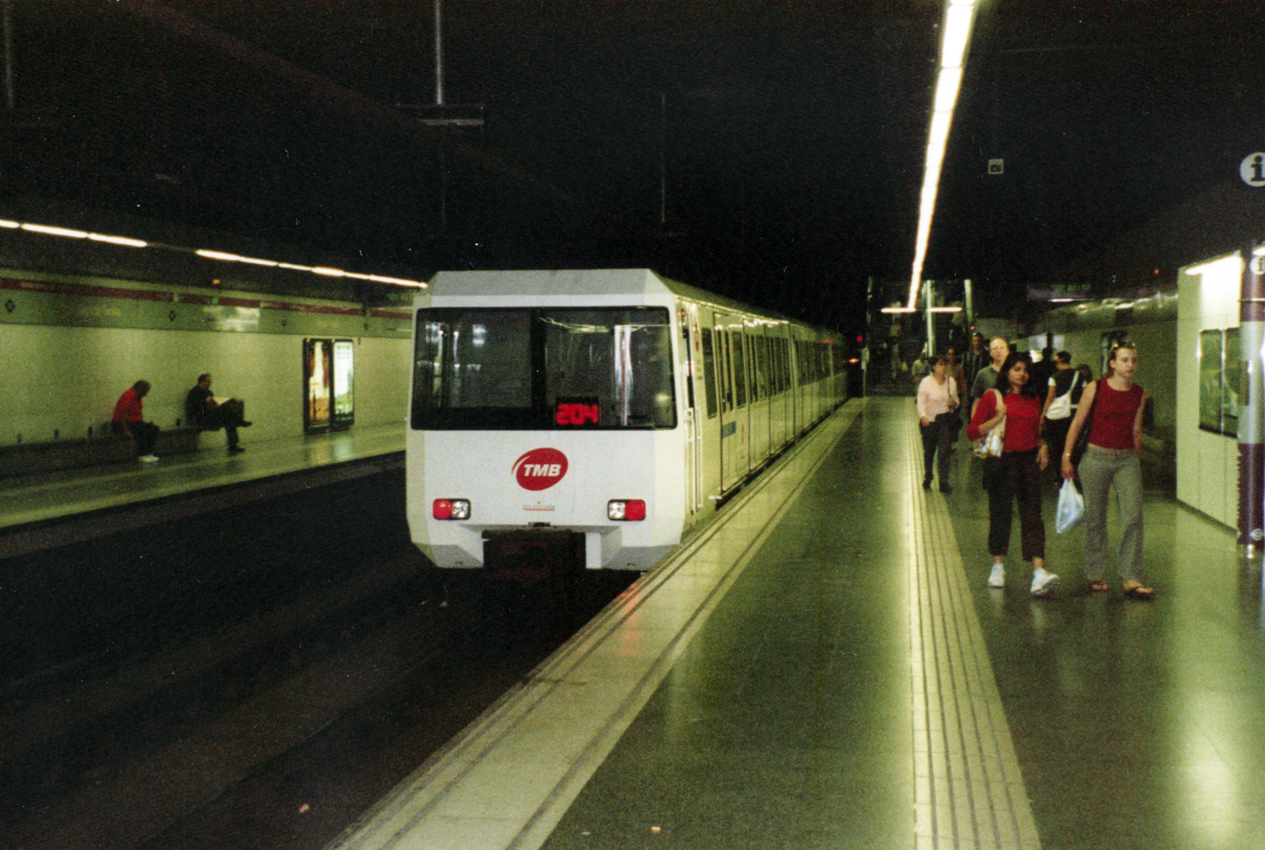
The Barcelona Metro's L5 line brought a station to serve the basilica and the surrounding neighborhood, making it one of the city's most accessible landmarks and a central hub for pilgrims and visitors. Wikipedia - Sagrada Família (Barcelona Metro)
2002
When construction of the basilica's Glory Facade finally began, the schools had to move. The entire building was carefully dismantled in blocks in 2002 and reconstructed at the southern corner of the site, at the intersection of Carrer de Sardenya and Carrer de Mallorca, where it now houses an exhibition about Gaudí's construction methods. Wikipedia - Sagrada Família Schools
Questions about Barcelona
What is Carrer de Sardenya known for historically?
It runs beside the Sagrada Família Schools, a wavy-roofed brick schoolhouse Antoni Gaudí built in 1909, with his own funds, for the children of the men constructing the nearby basilica.
What happened to the Sagrada Família Schools during the Spanish Civil War?
Fire destroyed the schools on 20 July 1936, and Gaudí's nearby workshop on Carrer de Sardenya was also destroyed by anarchists during the war.
Where do the Sagrada Família Schools stand now?
In 2002 the building was dismantled and reconstructed at the corner of Sardenya and Mallorca, where it now hosts an exhibition on Gaudí's methods.
What is Carrer del Consell de Cent known for historically?
It runs past the Episcopal Public Library, Barcelona's oldest surviving public library, founded in 1772 inside the Conciliar Seminary of Barcelona, which moved to this street in February 1882.
How did Carrer del Consell de Cent get its name?
The street was named in 1863 after the medieval Consell de Cent, the city council, and has been lined with buildings dating from 1881 to 1982.
What happened recently on these streets?
A building fire occurred on Carrer de Sardenya in September 2024, while a fire at 411 Carrer del Consell de Cent in December 2024 injured seven people; part of Consell de Cent was also rebuilt as a pedestrian promenade in 2022-2023.