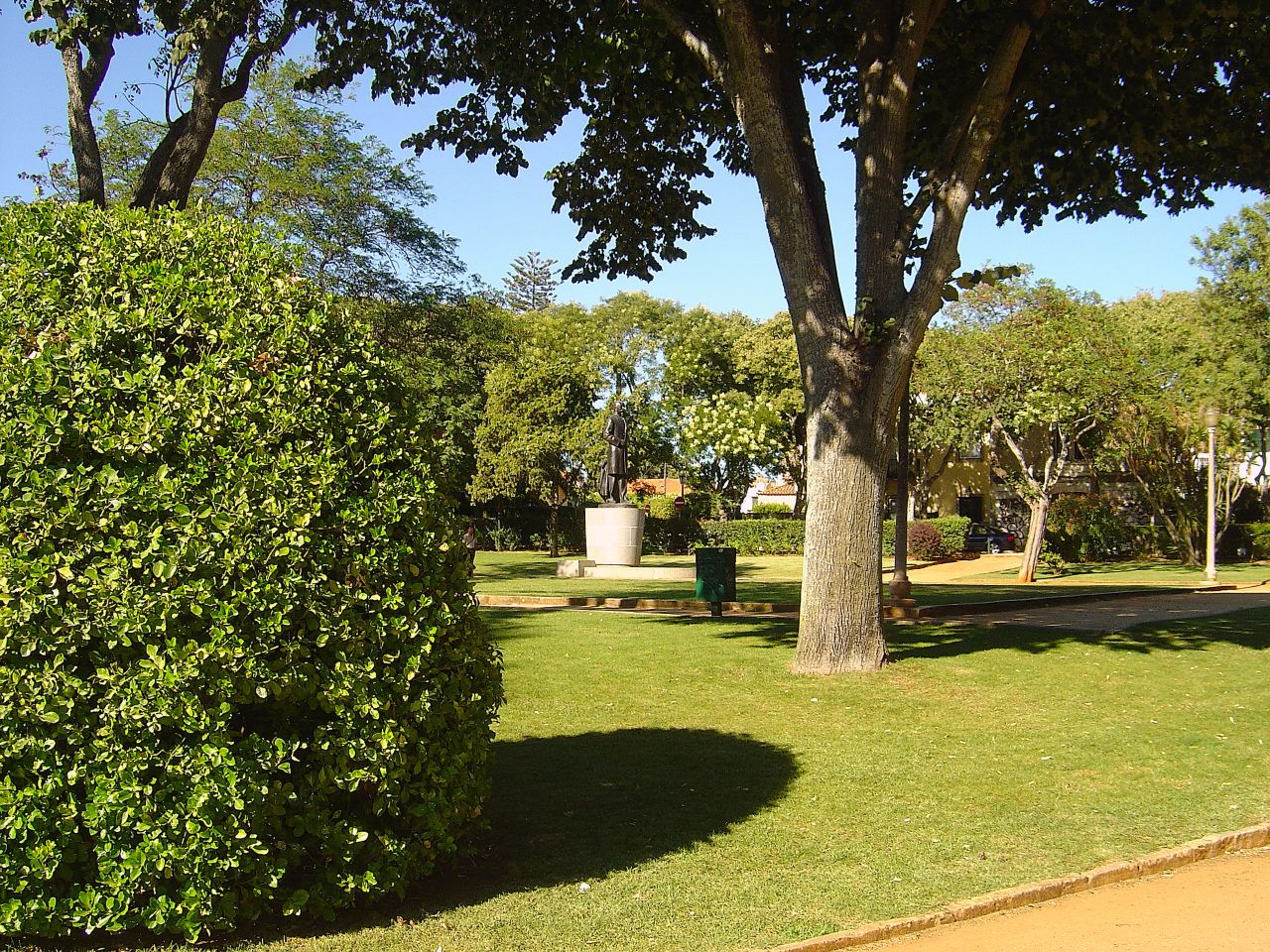
You're standing beside the Chalet Ficalho, a seaside villa built for Portuguese nobles in the 1880s.
Last reviewed 5 October 2026 · A three-minute read · 3008 BC–2023
The short answer
Chalet Ficalho is a 19th-century summer villa in Cascais, Portugal, built in 1887-1888 by the Viscount of Ovar and his wife Maria Josefa de Melo so their ailing daughter Helena could benefit from the sea air. Opened in 1898, it survives as a nine-room hotel after a 2023 restoration won Portugal's Maria Tereza and Vasco Vilalva heritage prize.
2006 · Vitor Oliveira from Torres Vedras, PORTUGAL · CC BY-SA 2.0
1887 to 1898
A noble family built this chalet for a sick daughter
You're standing beside the Chalet Ficalho, a summer house built for a Portuguese noble family and now run as a small hotel. Its red shutters and tiled rooms still face the garden its builders planted. The house went up between 1887 and 1888 for António Máximo da Costa e Silva, the Viscount of Ovar, and his wife, Maria Josefa de Melo, who later became the Countess of Ficalho. They built it on her own land, close to the Sporting Club of Cascais, where the future king, then Prince Carlos, liked to play tennis. Their daughter Helena had weak lungs, and her doctor had told the family the sea air here would help her. The house was first called Chalet Costa e Silva. It opened on 21 October 1898 with a party so large that the national newspapers covered it. The architect was Manuel Ferreira dos Santos. The garden belonged to Maria Josefa's father, Francisco Manuel de Melo Breyner, the 4th Count of Ficalho, a botany professor who helped found Lisbon's Botanical Garden.
1908 to 1941
A king's assassination sent the family into exile
On 1 February 1908, assassins shot King Carlos I dead in Lisbon. The royal family's circle of friends in Cascais, including Maria Josefa and her daughter Helena, feared more attacks on the nobility. They fled the country. The chalet stood closed for several years, its shutters locked, though it stayed in the family's hands the whole time. Maria Josefa eventually returned and kept the house until her death in 1941. By then the marriage that built the place had ended. Four years after the grand opening, she and the Viscount had separated. She kept the chalet and gave it the name it carries today, Chalet Ficalho, after her father Francisco Manuel de Melo Breyner's title.
mid-20th century
Writers called the Defeated by Life gathered in these rooms
In the decades after her death, the chalet became a meeting place for a group of writers and thinkers called the Vencidos da Vida, the "Defeated by Life." They gathered often in Cascais, and the chalet's rooms were part of their circle. The garden Maria Josefa's father had planted, full of palms and eucalyptus from the Lisbon Botanical Garden he helped found, gave them a quiet place to meet.
1974 to 2023
Eight heirs disputed the house for over a decade
After the Carnation Revolution of 1974 ended decades of dictatorship, the family's grandparents moved into the chalet permanently. When they died, the house passed to eight children, and disputes over dividing the property ran on for more than ten years. The building survived the delay largely unchanged, its woodwork, tiles and chandeliers still the ones installed in the 1890s.
The restoration happened in 2023. The architect Raúl Vieira led a careful restoration, keeping the original design rather than modernizing it. Workers restored the hand-carved woodwork, the old furniture, the painted tiles, the glass and the chandeliers. The red shutters that gave the house its character went back up, repainted in their original color. The jury for the Maria Tereza and Vasco Vilalva Prize, run by the Calouste Gulbenkian Foundation, gave the restoration its award that year, praising its "deep respect for the original design of the building."
2023 to now
A prize-winning restoration returned the chalet to its original look
The chalet now operates as a small hotel, with nine guest rooms inside the same walls the Viscount and Viscountess built in 1888. The marble fireplaces, ceiling moldings and antique tiles from the 1890s remain in place. The garden the Count of Ficalho planted still surrounds the building, its exotic trees now well over a century old. The King D. Carlos Sea Museum stands 190 feet away, housed in the old Sporting Club building where Prince Carlos once played tennis before he became king.
The red shutters and green slate roof the Viscount built in 1888 still face the garden his wife's father planted.
Read the ground you are standing on
Every person, building and event in this story opens into its own dig in the app — and Strata will dig the ground under your feet instead, wherever that is, in about a minute, with every source shown.
The Church of Nossa Senhora da Assunção, Cascais's mother church, has interior decoration datable to around 1520, though nobody recorded when its walls first went up.
The merchant ship Nossa Senhora dos Mártires, loaded with pepper from India, sank off Cascais in 1606, and its wreck later gave up Ming porcelain and astrolabes.
The great Lisbon earthquake of 1 November 1755 and the tsunami that followed badly damaged the Cascais Citadel, including the Fortaleza da Luz and its Santo António Tower.
The Viscount of Ovar built Chalet Ficalho in 1887-1888 so his daughter Helena, who had respiratory trouble, could take the doctor-prescribed sea air of Cascais.
When King Carlos I was assassinated in 1908, the Viscountess and her daughter went into exile fearing attacks on the aristocracy, and the chalet sat closed for years.
A Piper PA-31 Cheyenne II crashed just after takeoff from Cascais aerodrome on 17 April 2017, killing all four aboard and a truck driver on the ground.
The chalet's 2023 restoration, overseen by architect Raúl Vieira, won the Calouste Gulbenkian Foundation's Maria Tereza and Vasco Vilalva Prize for its fidelity to the original design.
The ground held a summer villa called Chalet Costa e Silva, built in 1887-1888 for the Viscount of Ovar and his wife Maria Josefa de Melo, before it was later renamed Chalet Ficalho and converted into a hotel.
Who built Chalet Ficalho?
The Viscount of Ovar, António Máximo da Costa e Silva, and his wife Maria Josefa de Melo, later Countess of Ficalho, built the house between 1887 and 1888, with Manuel Ferreira dos Santos as architect.
Why was Chalet Ficalho built?
The family built it so their daughter Helena, who had weak lungs, could take sea air in Cascais on her doctor's advice.
What happened at Chalet Ficalho after the king's assassination in 1908?
The family, fearing further attacks on the aristocracy after King Carlos I's assassination, went into exile and the chalet stood closed for several years, though it remained in the family's hands.
Why is it called Chalet Ficalho?
Maria Josefa de Melo renamed the house Chalet Ficalho after her father's title, the Count of Ficalho, following her separation from the Viscount of Ovar.
When was Chalet Ficalho restored?
A restoration completed in 2023, led by architect Raúl Vieira, kept the original design and won the Calouste Gulbenkian Foundation's Maria Tereza and Vasco Vilalva Prize that year.