Place · United Kingdom

The history of Altarnun

A coaching inn on Bodmin Moor, now a hotel and museum
Last reviewed 16 October 2026 · A three-minute read · 3500 BC–2003

Altarnun gathers its history on Bodmin Moor around Jamaica Inn, a stone coaching inn built in 1750 on ground where an inn had stood since 1547. It served Cornish smuggling routes, sheltered Daphne du Maurier in 1930, and now keeps a museum of smuggling and her work.

The short answer

Jamaica Inn's Daphne du Maurier & Smuggling Museum occupies a stone coaching inn built in 1750 on the old Launceston to Bodmin road across Bodmin Moor, Altarnun, replacing an earlier inn recorded here since 1547. The inn sat on a smuggling route, sheltered Daphne du Maurier in 1930, inspired her 1936 novel, and now holds a museum of smuggling and her work.
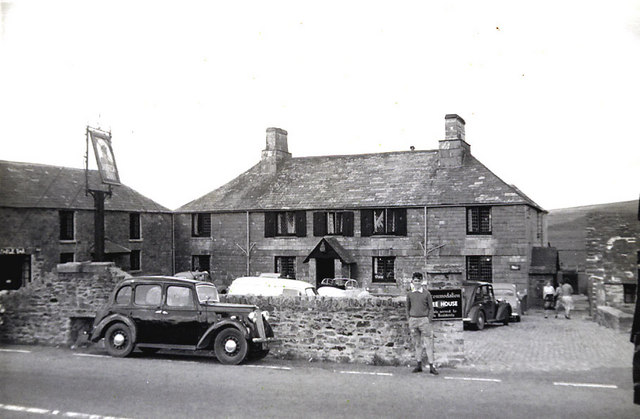
Jamaica Inn, Bodmin Moor As it was in 1959, long before the A30 was upgraded.
Jamaica Inn, Bodmin Moor As it was in 1959, long before the A30 was upgraded. — 1959 · Chris Coleman · CC BY-SA 2.0
1750 to 1778

A new stone inn replaced one on this road since 1547

Jamaica Inn is a stone coaching inn on Bodmin Moor, now run as a hotel with a pub, a museum, and a gift shop. The current building went up in 1750, replacing an older inn that had stood on this road since 1547. It sat on the old coach route between Launceston and Bodmin, where horses were changed and travelers broke their journey across one of the bleakest stretches of moor in Cornwall. In 1778, the owners added a coach house, stables, and a tack room, built onto the main building in an L-shape. Much of that work still stands.

People often assume the name comes from smuggled rum, but the real story is about land, not liquor. Historians credit the name to the Trelawney family, local landowners who held government posts in Jamaica in the 1700s. For a stretch it was even called the New Inn before the name changed.

The moor around it became smuggling country. Through the 1700s, smugglers used roughly a hundred hidden paths across Bodmin Moor to move contraband inland, avoiding customs men along the coast. Jamaica Inn sat near the middle of that network, a legal house doing a brisk and sometimes shady trade in illegal goods. Violence between smugglers and revenue officers was common on this coast. In 1768, not far off at Porthleven, an excise officer named William Odgers was murdered by a smuggling gang for doing his job.

Local story also tells of a stranger drinking alone at the inn around 1911. Someone called him outside into the dark. He left his drink unfinished and never came back. His body turned up on the moor the next day, and no one was ever charged.

1880 to 1962

The inn went dry for decades under Methodist influence

By 1880, Methodism had taken hold across Cornwall, and Jamaica Inn turned temperance, serving no alcohol at all for decades. Bert Horrell took over as tenant landlord in 1923, running it through the years that produced du Maurier's novel and its sudden fame. The inn changed hands again in 1962, sold on to new owners as its reputation grew with every new edition of the book and every new film.

November 1930

A lost rider's night here inspired a smugglers' novel

Daphne du Maurier rode out onto the moor one afternoon with her friend Foy Quiller Couch, and lost her way as darkness came down. Daphne du Maurier's horse found the road home and brought her to Jamaica Inn's door, and she sheltered there for the night. She came back the following year, visiting nearby Altarnun and its church of St. Nonna with Foy. The stay stuck with her. In 1936, she published a novel called Jamaica Inn, set on this same moor around 1815, about a young woman drawn into a smugglers' and wreckers' world run out of an inn much like this one. Du Maurier herself called the real building "hospitable and kindly, a temperance house on the twenty mile road between Bodmin and Launceston." By then the inn had gone dry, serving tea instead of rum. Alfred Hitchcock filmed an adaptation in 1939, and the story has been retold on screen since. Some tellings lean on the old legend of Cornish wreckers luring ships onto the rocks with false lights, though nothing firm ties that practice to this stretch of coast.

1988 to now

Listed stonework now houses a hotel, pub and museum

The building earned Grade II listed status in 1988, protecting its 1750 stonework and its 1778 stable range for good. At some point the novelist Alistair MacLean, famous for adventure thrillers of his own, held ownership of the inn. Today Jamaica Inn runs as a hotel with 36 bedrooms, a pub, a gift shop, and a museum devoted to smuggling and to du Maurier's work. The Smuggler's Bar keeps its low oak beams and a wide granite fireplace, much as it would have looked to travelers waiting out a Cornish storm two centuries ago. The Coaching Inn Group bought the hotel in August 2022. That same year, the inn's owner banned fox hunts from the property, saying the association cost more business than it brought in.

Jamaica Inn still stands on Bodmin Moor much as it did in 1750, now welcoming guests instead of smugglers.

Read the ground you are standing on

Every person, building and event in this story opens into its own dig in the app — and Strata will dig the ground under your feet instead, wherever that is, in about a minute, with every source shown.

Get Strata on the App Store Free on iPhone · opens this place if you have it
On a computer? Point your iPhone camera here.

Where this is

50.562°N 4.565°W TILE ≈ 1.2 × 0.6 KM
Place
Jamaica Inn
Town
Altarnun
Country
United Kingdom
Tile
≈1.2 × 0.6 km (geohash6)
Standing here
Jamaica Inn's Daphne du Maurier & Smuggling Museum
Last reviewed
16 October 2026

The layers, in order

Sourced records, high and medium confidence. Era background is marked as such.
Prehistoric
3500-1500 BC
Several stone circles, including the Goodaver and Leskernick circles, stand two to three kilometers away, raised sometime between the Neolithic and Bronze Age.
Wikipedia / Wikidata · record, medium
2200-800 BC
Round barrows and a platform cairn built on Priddacombe Downs and near Dozmary Pool, around 2 kilometers off, date from the Bronze Age, roughly 2200 to 800 BC.
Wikidata · record, medium
Medieval
1066-1540
A scheduled deserted medieval settlement and field system, with an older prehistoric layer beneath it, lies about 2 kilometers away on the moor.
Wikidata · record, medium
Early modern
1547
A hamlet called Bolventor and an inn on this same road are recorded here from 1547, two centuries before the present building replaced it.
Wikipedia / FamilySearch · record, medium
c.1700-1850
Through the second half of the 18th century the inn sat on a landscape of roughly a hundred secret smuggling routes carrying contraband brandy and rum off the coast.
1750
The current stone building beside you went up in 1750 as a staging post where coach horses were changed on the lonely road across Bodmin Moor.
Wikipedia · record, high
1778
The inn was extended in 1778 with an L-shaped coach house, stables and a tack room to serve the horses changed here.
Wikipedia · record, high
Modern
A Grade II listed war memorial with its dwarf walls stands about 43 meters from the inn, commemorating the hamlet's dead.
November 1930
In November 1930 Daphne du Maurier's horse lost its way on Bodmin Moor at night and carried her to this inn for shelter, the visit that would inspire her novel.
Launceston Then · record, medium
1936
Du Maurier set her 1936 novel of smugglers and wreckers at this inn, calling it in her own words a 'temperance house on the twenty mile road between Bodmin and Launceston.'
1939
Alfred Hitchcock directed a 1939 film version of the novel, though the shoot never actually came to this building.
Wikipedia · record, high
1984-2003
From 1984 to 2003 the inn displayed Walter Potter's Victorian taxidermy dioramas, including an animal schoolroom populated by stuffed squirrels, before the collection was auctioned off.
Wikipedia · record, high
1988
The inn was added to the national heritage list as a Grade II building on 23 November 1988.
Historic England · record, high

Questions about this place

Answered in one sentence, then in full above
What was here before Jamaica Inn was built?
An earlier inn stood on this same road from 1547, two centuries before the present stone building replaced it in 1750.
What happened at Jamaica Inn in 1930?
In November 1930 Daphne du Maurier's horse lost its way on Bodmin Moor at night and carried her to the inn, where she sheltered until morning. The experience inspired her 1936 novel Jamaica Inn, set on the same moor.
Why is it called Jamaica Inn?
Historians trace the name to the Trelawney family, local landowners who held government posts in Jamaica in the 1700s, rather than to any trade in smuggled rum. The inn was known for a time as the New Inn before the name changed.
Did smuggling actually happen at Jamaica Inn?
The inn sat near the middle of a landscape of roughly a hundred hidden smuggling paths crossing Bodmin Moor through the 1700s, used to move contraband brandy and rum inland away from customs men on the coast.
Is Jamaica Inn still open today?
It operates as a hotel with 36 bedrooms, a pub called the Smuggler's Bar, a gift shop, and a museum covering smuggling history and Daphne du Maurier's work. The Coaching Inn Group bought the hotel in August 2022.
Was Jamaica Inn used in the Hitchcock film?
Alfred Hitchcock directed a 1939 film adaptation of du Maurier's novel, though the shoot itself did not take place at the actual building.

Where this came from

1
Wikipedia — Jamaica Inn built as a coaching inn, 1750
2
Wikipedia / FamilySearch — An inn stood on this ground from 1547
3
Launceston Then — Daphne du Maurier got lost on the moor and sheltered here, 1930
4
Daphne du Maurier Society — Jamaica Inn, the novel, published 1936
5
Strange and Twisted / Smuggling Britain — A stopping point for Cornish smuggling networks
6
Historic England — Grade II listed in 1988
7
Historic England / Wikidata — War memorial and dwarf walls close by
8
Wikidata — A deserted medieval settlement two kilometers off
9
Wikidata — Bronze Age barrows and cairns on the moor
10
Wikipedia / Wikidata — Neolithic or Bronze Age stone circles across the moor

Dug nearby

A Georgian prison, now a hotel and museum
Bodiniel Road, Bodmin
15 km
A Tudor mansion inside a ruined castle
Berry Pomeroy Castle, Berry Pomeroy
67 km
A medieval house once a pub, now a haunted guesthouse
Potters Pond, Wotton-under-Edge
200 km
This is one spot. Strata reads the ground wherever you are standing. Free on iPhone