The history of Township of Conyngham
Within Conyngham Township lies Centralia, Pennsylvania, a borough founded above a coal seam bought by a Philadelphia sea captain around 1830 and incorporated in the 1860s. A mine fire ignited on May 27, 1962, outlasted the town's population, leaving only a handful of residents and a condemned borough by the twenty-first century.
Main Street runs through Centralia, Pennsylvania, a borough in Columbia County built over an anthracite coal seam that has been burning underground since May 27, 1962. Once home to nearly 2,800 people and dozens of businesses, Centralia had only five residents by 2020, its name tied to the fire that emptied it.
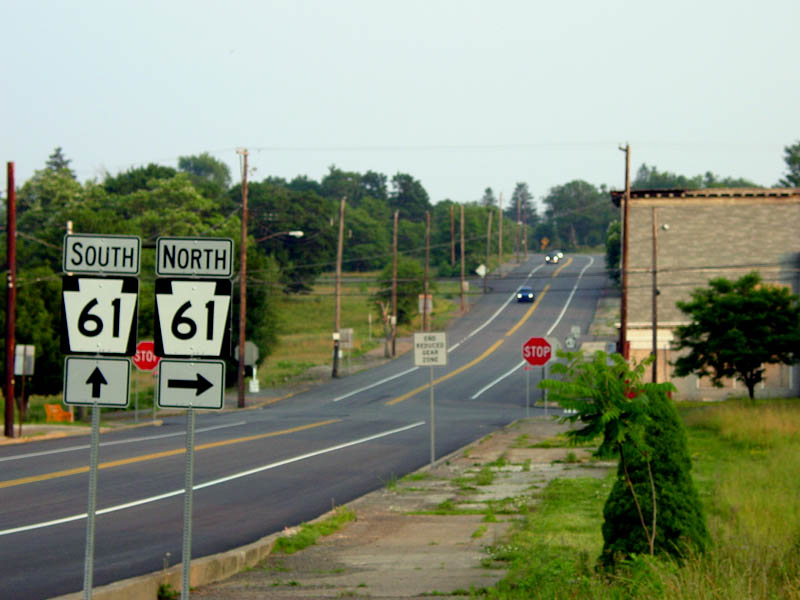
A tavern keeper's settlement became a coal company town
Centralia is a near-empty borough in Columbia County, Pennsylvania, where a handful of streets remain and smoke still rises from cracks in the ground. Main Street runs through what was once a busy mining town of churches, hotels, and shops. Now it runs past empty lots and a few remaining houses.
The valley started as wilderness. Native American tribes sold the land to colonial agents in 1749 for £500. Stephen Girard, a Philadelphia banker born in France, later bought much of it after learning it held anthracite coal. In 1832, Jonathan Faust opened the Bull's Head Tavern here, and the settlement took its first name from it. Jonathan Faust did not own the land. He simply built on it, and nobody challenged him.
By 1842, the Locust Mountain Coal and Iron Company owned the ground. A mining engineer named Alexander Rae moved his family in and laid out the streets. He called the place Centreville. When the post office found that name already taken in Schuylkill County, he renamed it Centralia in 1865. The borough was incorporated the following year.
The founder was shot dead and the town boomed anyway
Coal built Centralia fast. Mines opened one after another through the 1850s and 1860s, and railroads carried the anthracite out to eastern markets. But the same decade brought violence. Centralia became a center of activity for the Molly Maguires, a secret society of Irish miners fighting for better wages and conditions.
On October 17, 1868, Alexander Rae was shot dead in his buggy on the road between Centralia and Mount Carmel. Three men were convicted of his murder and hanged in Bloomsburg on March 25, 1878.
The town recovered and grew. By 1890, Centralia held 2,761 people, the most it would ever have. It supported seven churches, five hotels, twenty-seven saloons, two theaters, a bank, and fourteen stores. Main Street, the street this point sits on, was the spine of all of it.
A landfill fire lit the coal seam below the streets
World War I began the decline. Young miners enlisted and never came back to the pits. The Great Depression closed five of the big mines in 1929. Smaller operators kept going through "bootleg mining," men stripping coal from the pillars left to hold up the tunnel roofs. It was cheap and it was dangerous, and it left the ground beneath Centralia honeycombed and unstable.
By 1960, only 1,435 people remained in a town built for three times that many. Then, on May 27, 1962, the borough council hired men to burn the town landfill clean before Memorial Day. The dump sat in an old strip pit, open ground where coal had once been dug out. The fire caught, and it did not stay in the trash. It found a seam of coal underneath and went down into it.
Some researchers argue the fire may have started earlier still, in an older blaze from the same pit that was never fully put out. Historians credit the town council's version, that the Memorial Day cleanup lit it, as the one most sources accept.
A boy nearly fell into a 150-foot sinkhole
The fire spread through old mine tunnels, some 300 feet down, under an eight-mile stretch of coal. For years it burned quietly, out of sight, while the town above went on with its ordinary life.
By the early 1980s, that changed. Steam and gas began rising through basement floors and cracks in yards. In 1981, a twelve-year-old named Todd Dombowski was in his backyard when the ground opened beneath him. A sinkhole dropped away, plunging roughly 150 feet, and tested lethal for carbon monoxide. He grabbed a tree root and held on until his cousin pulled him out.
The near-death of a child made the danger impossible to ignore. Congress allocated $42 million in 1984 to buy out Centralia's homeowners and move them elsewhere. Most people took the offer, though some refused.
The state condemned every remaining home in the borough
Pennsylvania's governor invoked eminent domain over the whole borough in 1992, condemning every remaining property. Families who stayed lost the right to pass their homes to their children. The post office dropped Centralia's ZIP code in 2002, and mail now comes through nearby Ashland.
By 2020, five people remained, the smallest population of any municipality in Pennsylvania. At the rate it moves, it could keep burning for another 250 years.
Centralia's name reached people who never set foot here. The abandoned stretch of Route 61 nearby, cracked open and spray-painted for decades, became known as the Graffiti Highway before the state buried it under dirt mounds in 2020 to stop trespassers. The town's story is often cited as an inspiration for the Silent Hill horror film, though the film set its own burning town in West Virginia, not Pennsylvania.
What is left of Centralia today is mostly empty lots, a few houses, cemeteries, and smoke still drifting from the ground.
Smoke and steam still rise here and there from the ground along what was once Main Street.
Every person, building and event in this story opens into its own dig in the app — and Strata will dig the ground under your feet instead, wherever that is, in about a minute, with every source shown.